Meridian Coffee Roasters — Wholesale Operations
A live, role-based ops tool that replaces a roastery's shared spreadsheet and group text with one real-time source of truth — access enforced in Postgres, not just hidden in the UI.
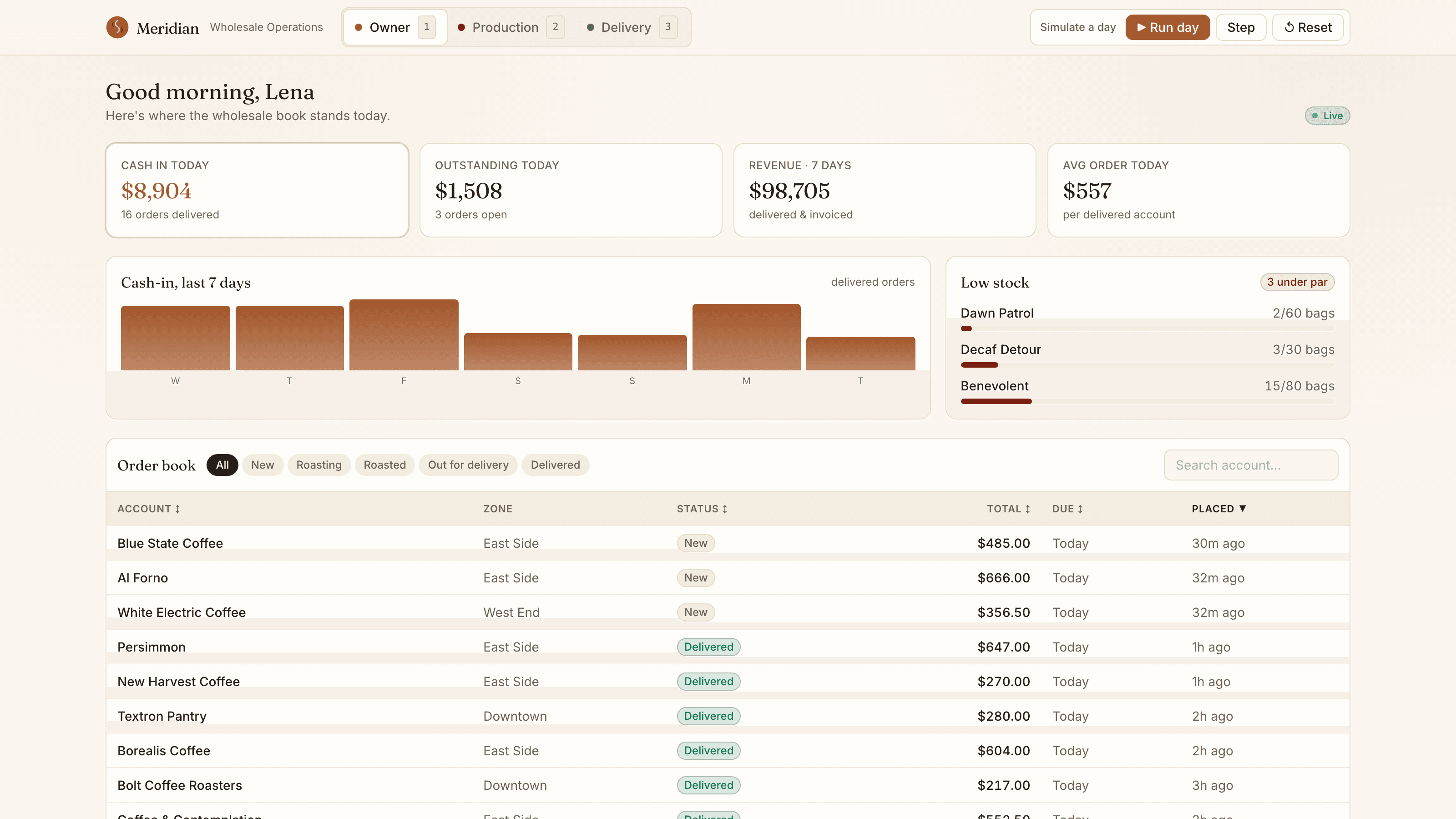
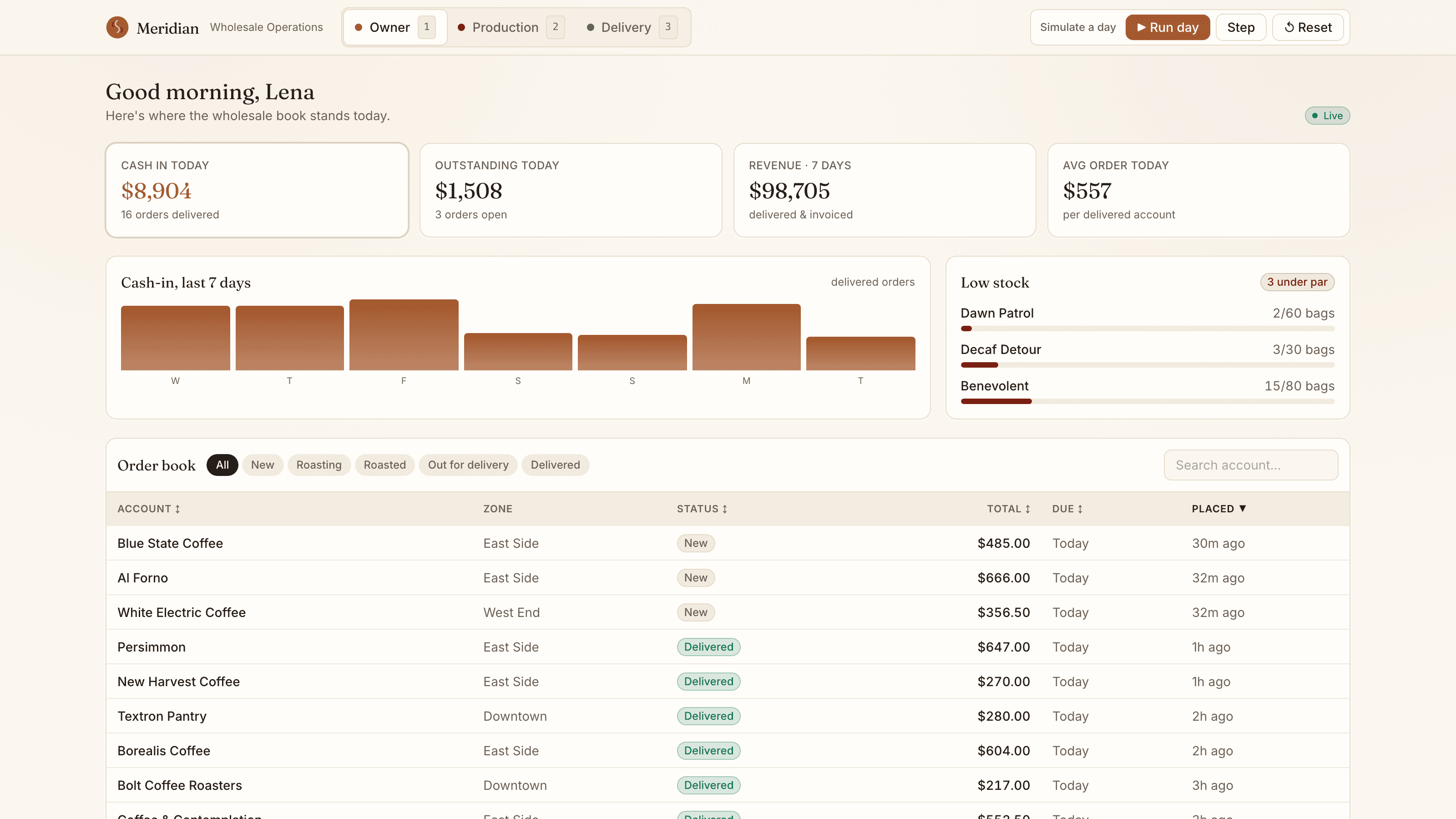
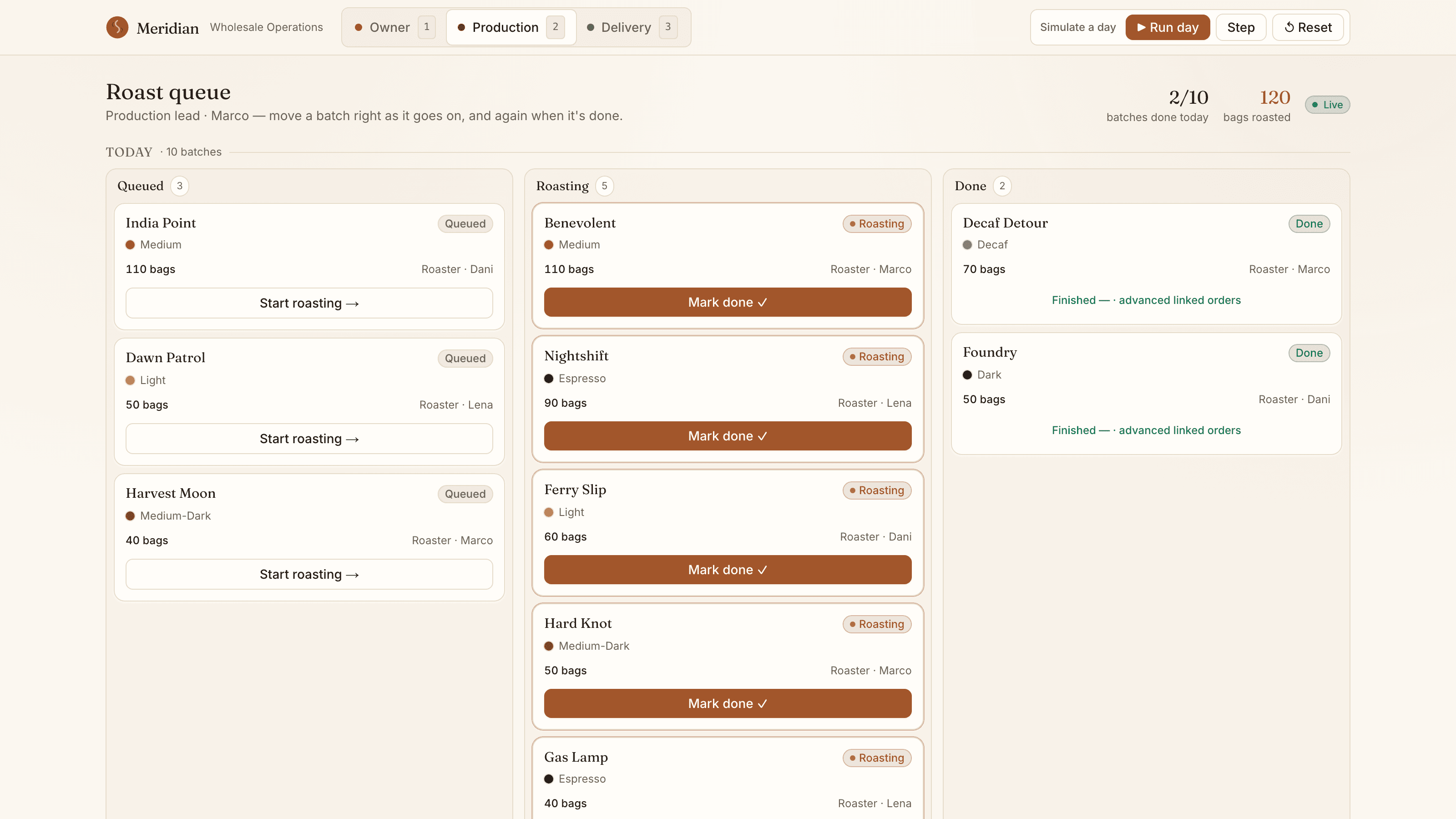
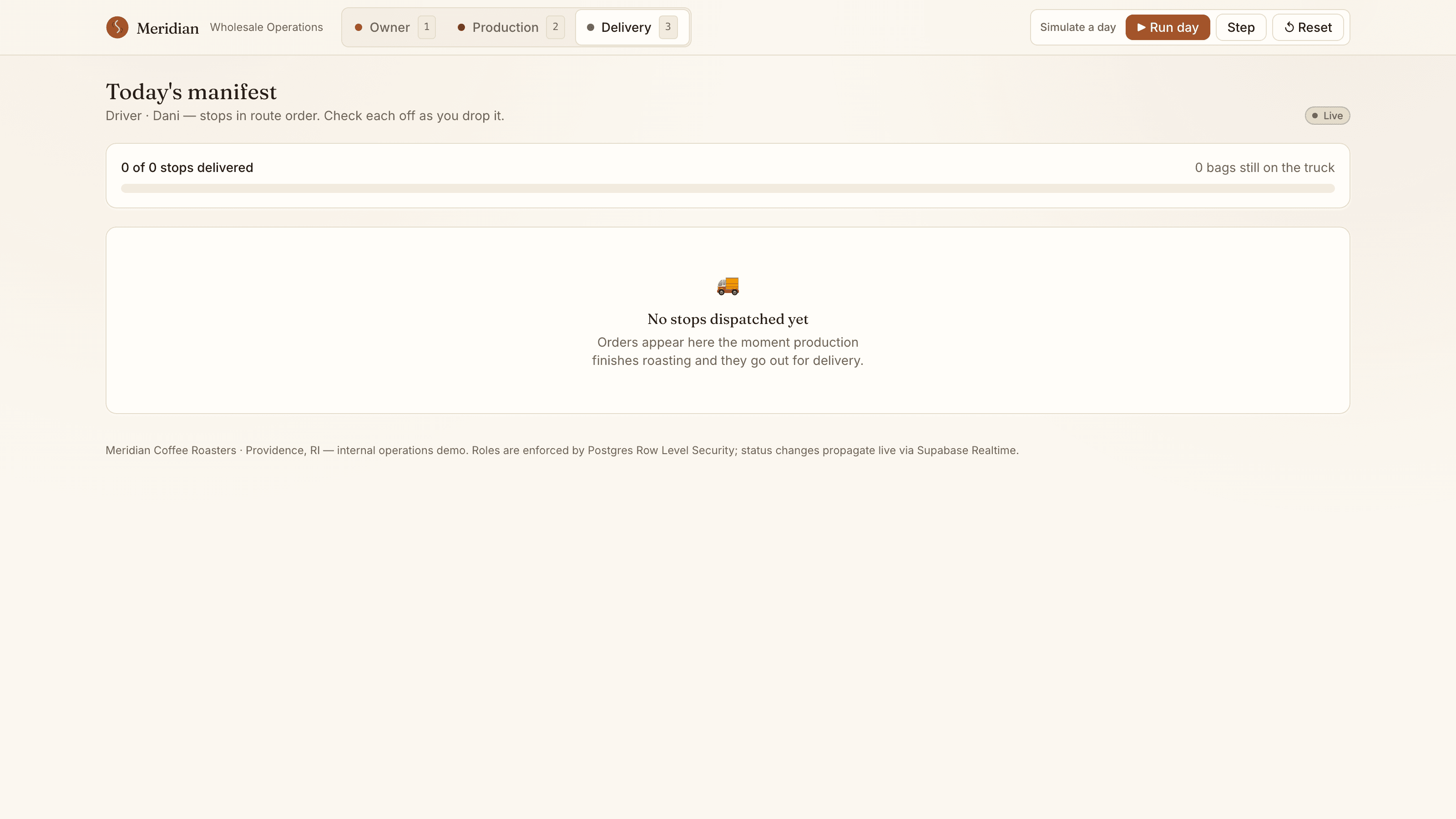
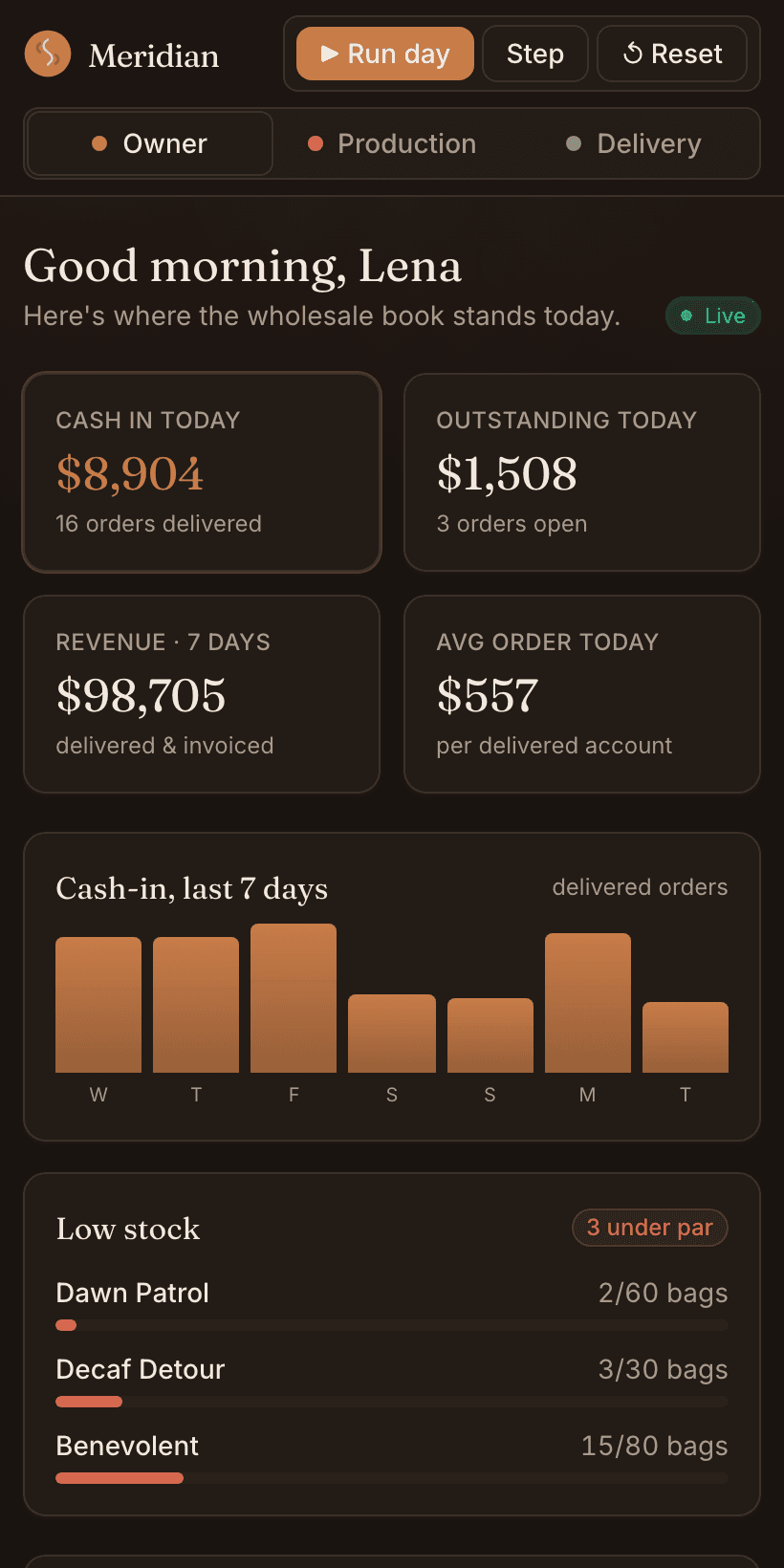
Opens on the Owner view — switch seats with the Owner / Production / Delivery tabs (or keys 1 / 2 / 3) and hit "Run day" to watch a simulated day flow across all three views live. The demo runs fully keyless — roles resolve from a request header instead of a verified JWT, but the SAME row-level-security policies gate every write, with no service-role key and no special powers. Best viewed on desktop.
The problem
Meridian roasts coffee and wholesales bagged beans to ~40 cafés, restaurants, and offices. The entire wholesale operation ran on one shared spreadsheet and a group text — so standing orders got missed, roasts were scheduled wrong, deliveries went out short, and the owner had no daily read on cash. The brief — kill the spreadsheet, surface cash position daily, and put production and delivery on the same live data.
The approach
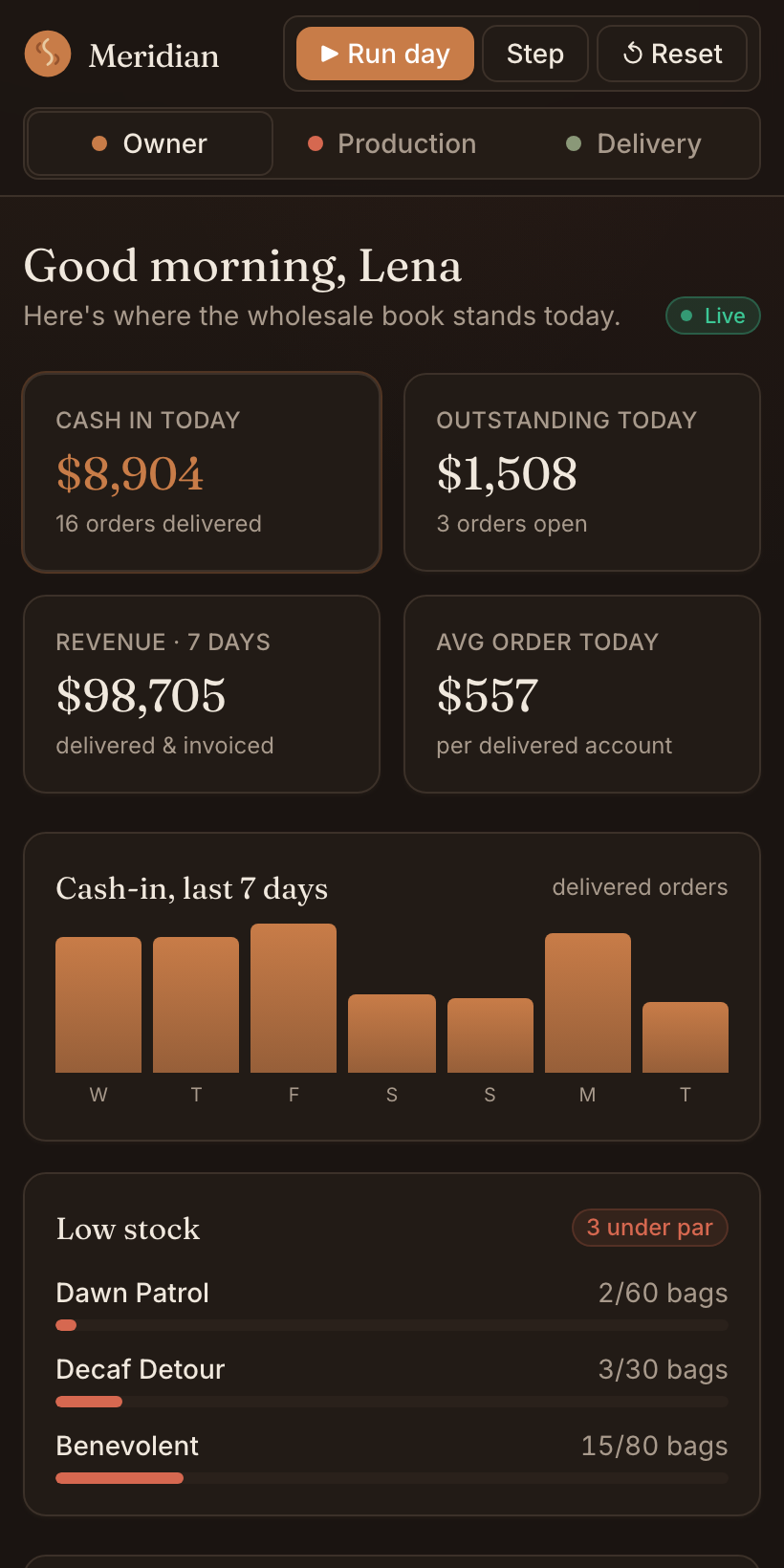
A role-based internal dashboard with three seats working off shared real-time data — Owner (revenue, cash-in vs. outstanding, low-stock alerts, the full order book), Production (a roast-queue board, Queued → Roasting → Done), and Delivery (today's route-ordered manifest as a checklist). When production marks a batch roasted, a database trigger replenishes stock and advances every linked order, and it surfaces on the delivery manifest and the owner's dashboard within a second — no refresh, no business logic duplicated in the UI.
The outcome
One live source of truth where there used to be a spreadsheet and a group text. Roles resolve through a single Postgres function and the same Row-Level-Security policies enforce every write — proven with rejection tests, so delivery literally cannot touch the roast board and production cannot create orders. Seeded with ~40 accounts so it's alive on first load, installable as a PWA, and a "Simulate a day" control drives orders through a realistic day across all three views in real time — through the exact same RLS-gated paths a human uses.
Killing the spreadsheet — a live ops tool for a coffee roastery
Three roles, one real-time source of truth, with access enforced in the database — not just hidden in the UI.
Meridian roasts coffee and wholesales bagged beans to ~40 cafés, restaurants, and offices. The entire wholesale operation ran on one shared spreadsheet and a group text. So standing orders got missed, roasts were scheduled against stale numbers, deliveries went out short, and the owner had no daily read on cash. The brief was blunt: kill the spreadsheet, surface cash position every morning, and get production and delivery onto the same live data.
What I built
A role-based internal dashboard with three seats working off shared, real-time data.
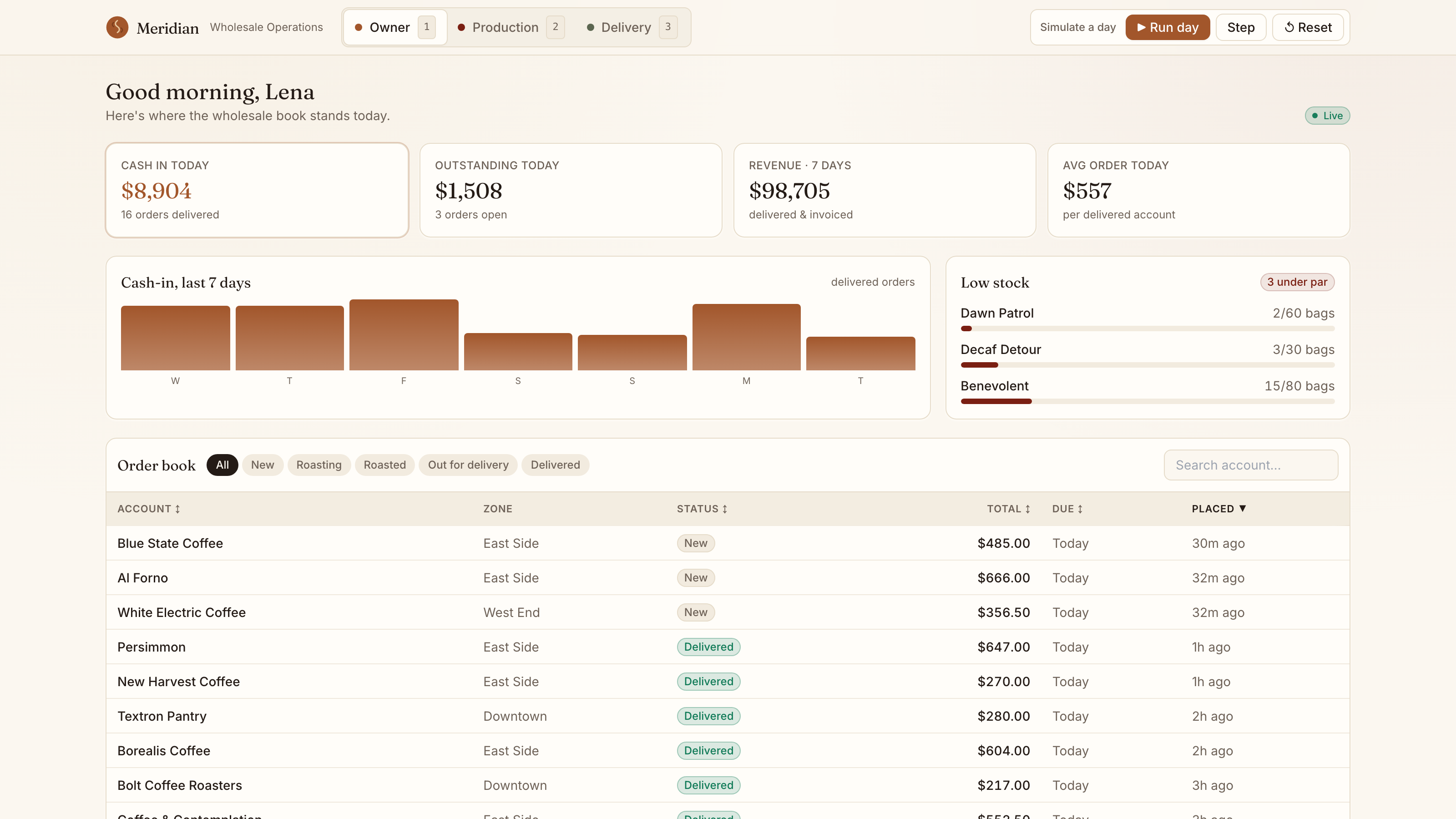
Owner — revenue, cash-in vs. outstanding, low-stock alerts, and the full order book on one screen. The number the owner never had: how much money is actually in vs. still owed, today.
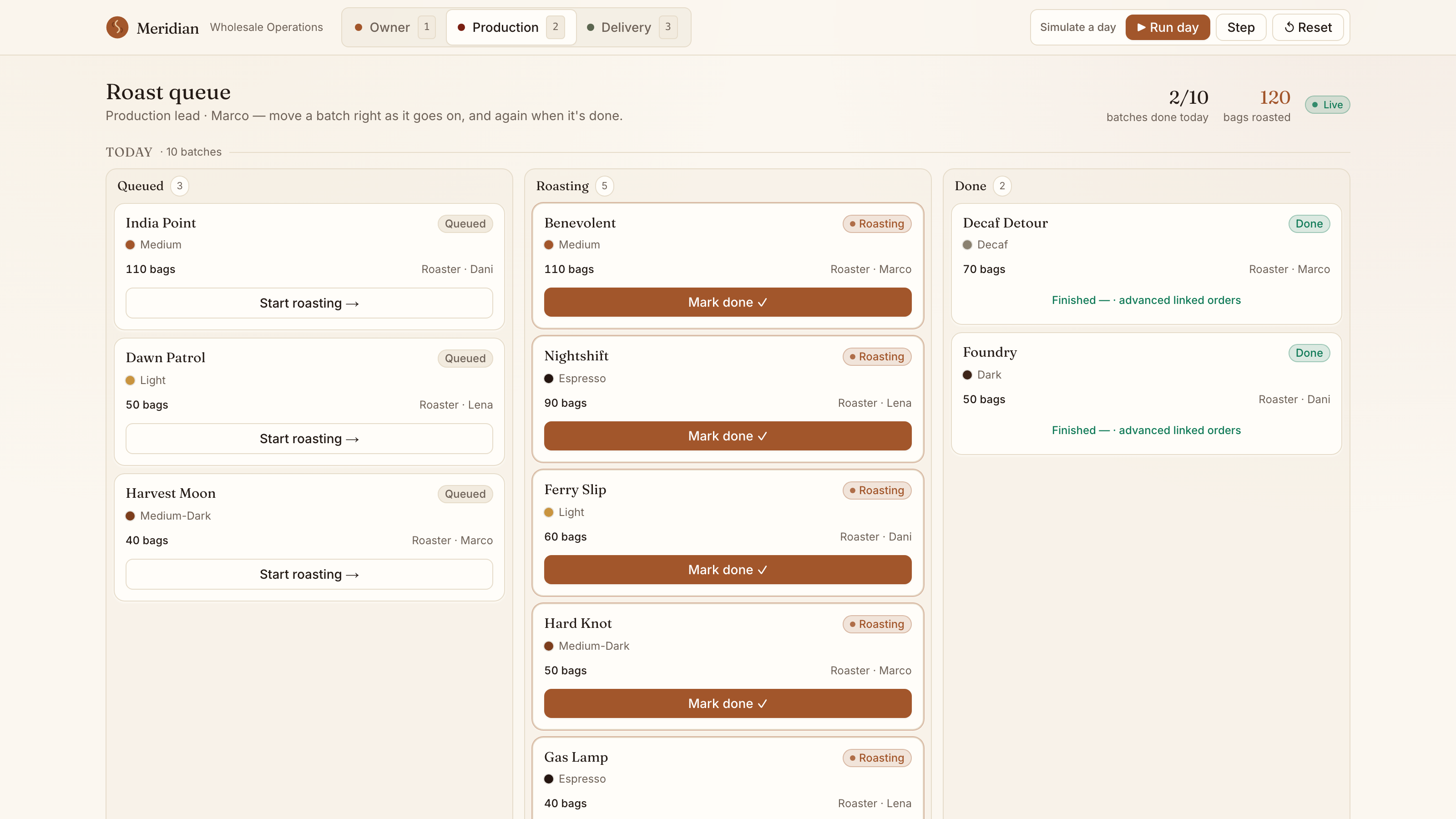
Production — a roast-queue board that moves batches Queued → Roasting → Done. No spreadsheet rows, no guessing what to roast next.
Delivery — today's manifest, route-ordered, as a checklist. Mark each stop delivered and it clears.
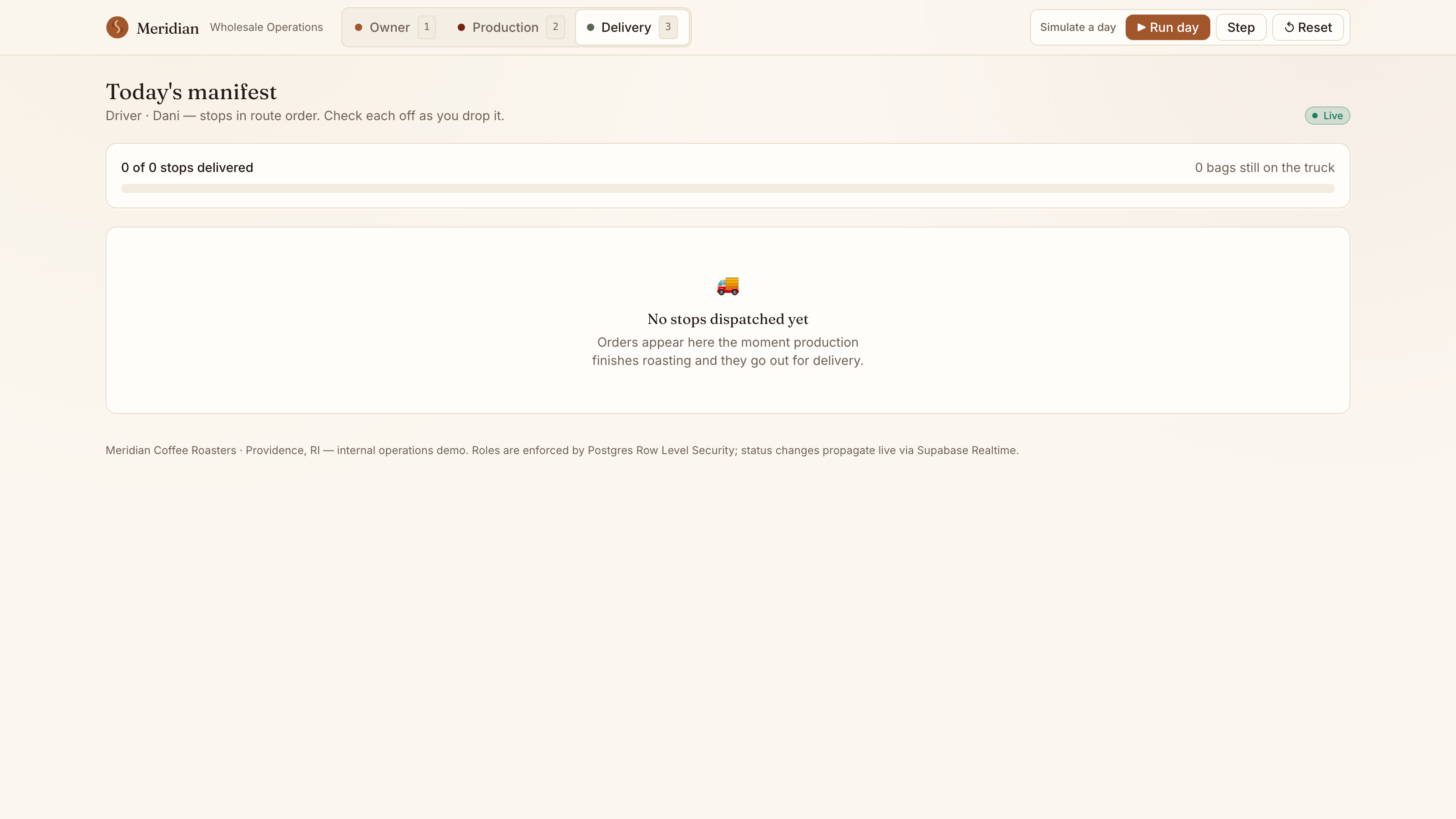
When production marks a batch roasted, it appears on the delivery manifest and the owner's dashboard within a second, no refresh.
Three things I'm proud of
Real Row-Level Security — the same policies in the demo and in production.
Roles resolve through one Postgres function that reads a verified JWT claim in
production, or a request header in the keyless demo — and the same policies
enforce both. Every write is gated to the single role allowed to make it, proven
with rejection tests: delivery literally cannot touch the roast board;
production cannot create orders. Security lives in the database, not in a
hopeful if in the UI.
Live cross-role updates, with the cascade in the database. Supabase Realtime pushes changes to every open seat, and database triggers turn one action into the right chain of effects — a finished batch replenishes stock and advances every linked order — so there's no business logic duplicated in the UI. One action, one source of truth, three views that all agree.
A "Simulate a day" control that's honest. Hit Run day and orders flow through a realistic day — new orders drop in, batches roast, orders dispatch, deliveries complete — cascading across all three views in real time. Crucially, it drives the app through the exact same RLS-gated paths a human uses: no service-role key, no special powers. It's a live demo that can't cheat, which is the whole point.
Craft details
Seeded with ~40 accounts so it's alive on first load — not an empty shell you have to imagine in use. A warm, editorial brand identity sits over a dense, keyboard-friendly back-office UI (Owner / Production / Delivery on keys 1 / 2 / 3). Dark mode is system-driven, it's responsive from phone to desktop, and it's installable as a PWA.
What it demonstrates
I can model a real operation end-to-end — schema, security, realtime, and a UI that's a pleasure to use — not just CRUD. The interesting work wasn't drawing three dashboards; it was deciding that access control belongs in the database, designing a demo that proves it without weakening it, and making the whole thing honest enough to hand to a prospect with nothing to log into.